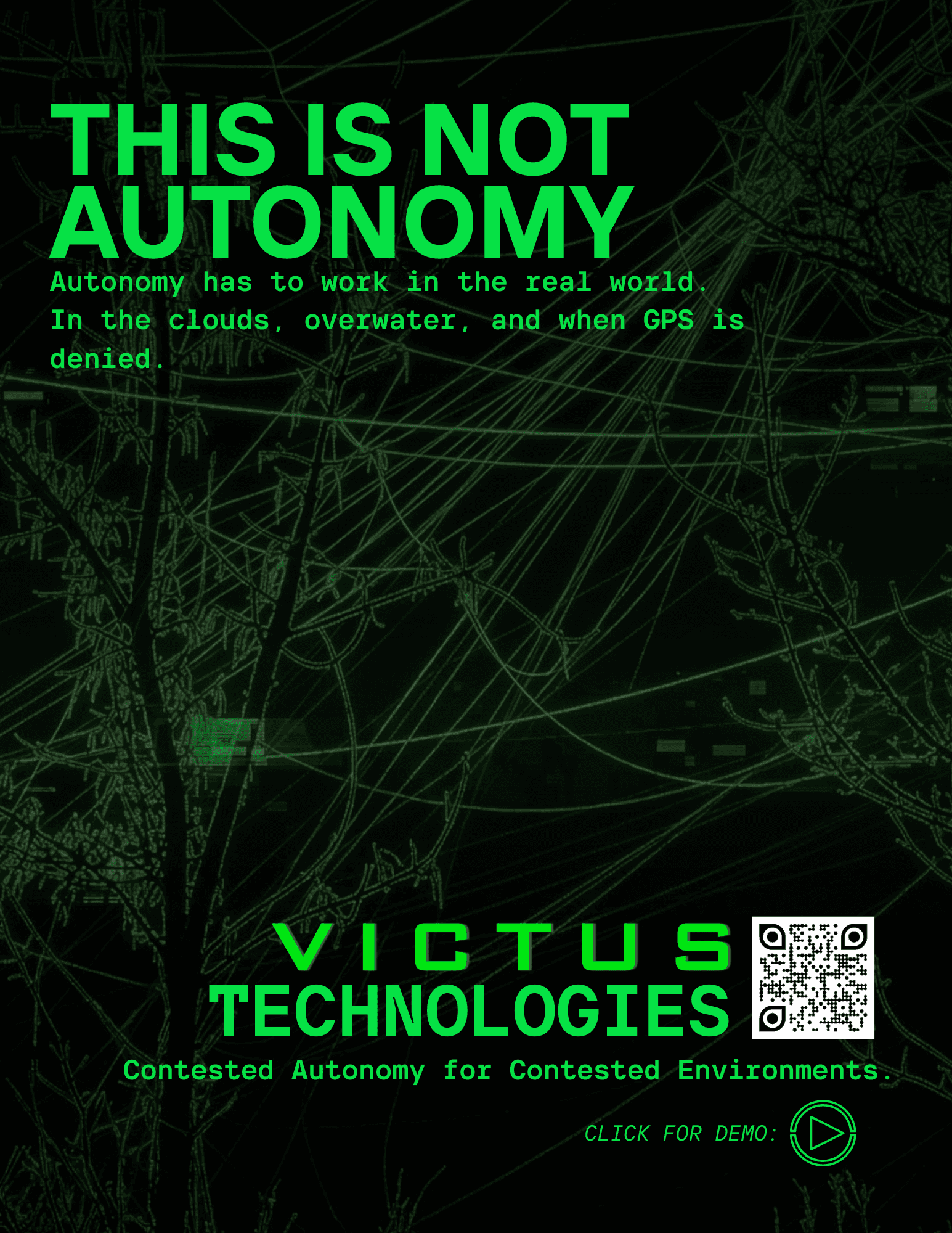
Satellite navigation can no longer be treated as guaranteed.
Across modern conflict zones, GPS is degraded, denied, or actively manipulated as a matter of routine.
Workarounds such as fiber-optic tethering illustrate the scale of the problem: autonomy systems that depend on persistent connectivity or computer vision alone cannot operate reliably in contested electromagnetic environments.
At the same time, the market has blurred critical distinctions. Many “GPS-denied” claims are sensor substitutions, not software-defined autonomy.
For operators, that distinction is the difference between mission success and platform loss.
VICTUS had a real capability. It needed a category.
Translating technical capability into operational advantage.
To support VICTUS Technologies’ Seed through Series A positioning in Washington, DC, we refined and extended their existing brand to reflect the operational realities of contested autonomy while maintaining alignment with their core identity and the broader defense technology ecosystem.
We designed and executed an integrated suite of materials across print and digital channels, including capability statements, interactive briefs, social media campaigns on LinkedIn, TikTok, and X, long-form thought leadership placements, and stakeholder-facing collateral. Each asset was built to translate technical capability into operator-relevant language for investors, primes, and policy audiences.
Insights gathered from campaign performance informed iterative message development, strengthening engagement and ensuring external communications resonated with decision-makers in the national security community.